

One of the practical things you have to figure out after moving to Hungary is where to do your weekly grocery shopping. Hungary has plenty of supermarket choices, from discount chains such as Lidl, Aldi and Penny to larger Tesco, Auchan and Interspar stores and smaller neighbourhood supermarkets.
After living in Hungary and shopping for our family here, Lidl has become the supermarket I use most often. I occasionally shop at Aldi, Penny, SPAR and Tesco as well, and sometimes choose local markets when I want fresh fruit and vegetables.
This guide isn’t an attempt to declare one supermarket objectively better than all the others. Prices, promotions, store sizes and even product availability can vary. Instead, I’ll explain the main supermarkets in Hungary, how grocery shopping works, which loyalty programmes are worth knowing about and what I’ve personally found useful since moving here.
If you’re planning a move rather than simply visiting, you may also want to start with my complete guide to moving to Hungary.
What Are the Main Supermarkets in Hungary?
The supermarket names you’re likely to encounter include:
- Lidl
- Aldi
- Penny
- SPAR and Interspar
- Tesco
- Auchan
- CBA and Príma
- Coop
- Reál
There isn’t one supermarket that makes sense for every shopper. Lidl, Aldi and Penny operate primarily as discount supermarkets, while larger Tesco, Auchan and Interspar stores generally offer broader ranges.
For our regular family grocery shopping, however, Lidl is the store I return to most often.
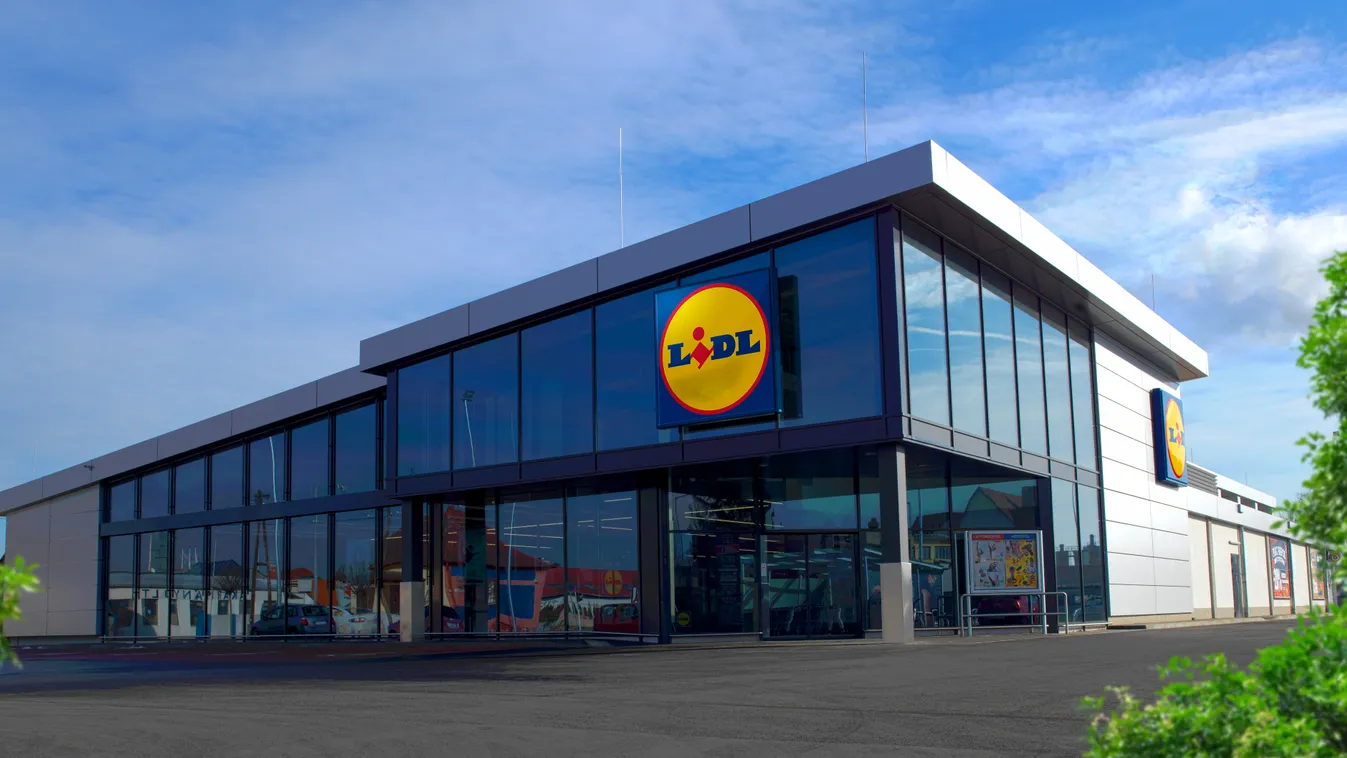
Lidl Hungary: My Main Supermarket
If you asked me personally where I normally buy groceries in Hungary, the answer would be Lidl.
It’s the supermarket I’m most familiar with and the one I genuinely like shopping at. Based on my own regular shopping, I’ve generally found Lidl to be one of the most affordable options for what our family buys, although I wouldn’t claim that every individual product is always cheaper there than at every competing supermarket.
I also find the fruit and vegetable selection quite good, which matters when you’re buying groceries regularly for a family. Another reason I use Lidl so much is the Lidl Plus app.
Is Lidl Plus Worth Using in Hungary?
If you’re going to shop at Lidl regularly, I would definitely download Lidl Plus. It’s a free app, and I use it myself. It provides coupons and discounts, and there are sometimes additional rewards connected with your shopping. The offers change, so you have to check what’s currently available rather than assuming that the same discounts will always be there.
Lidl’s official information says the app includes weekly offers, individual coupons, digital receipts and other partner offers. You activate applicable coupons and scan your Lidl Plus card when paying. For me, it’s one of those small things that makes sense once Lidl becomes your regular supermarket.
My experience with Lidl: best suited to our everyday family shopping, good fruit and vegetables, reasonable prices and useful app discounts.
Aldi Hungary
Aldi follows a similar discount-supermarket model to Lidl and is another familiar sight around Budapest and elsewhere in Hungary. I shop there occasionally rather than using it as my main supermarket, so I wouldn’t personally rank Aldi against Lidl for every product category.
It’s nevertheless a useful alternative if you have one conveniently located near your home, and its stores cover the everyday basics you would expect: fresh produce, dairy, meat, bakery products, frozen food, pantry items and household essentials. Aldi also has a Hungarian app where shoppers can see current promotions, plan their shopping and locate nearby stores.
For someone newly arriving in Hungary, I’d simply try both Lidl and Aldi and see which one works better for the products you normally buy. Location also matters more than supermarket rankings sometimes suggest.

Penny Hungary
Penny is another major discount supermarket you’ll see throughout Hungary.I shop there sometimes, although considerably less frequently than Lidl. One practical development worth knowing about is the PENNY Card (PENNY Kártya). Penny offers card-specific prices and digital coupons, and the card can be connected with the Penny app.
If you have a Penny near your home and use it regularly, it’s therefore worth checking the card offers rather than judging prices only by the standard shelf price. The app can also be used to browse weekly offers, create a shopping list and find stores.

SPAR and Interspar
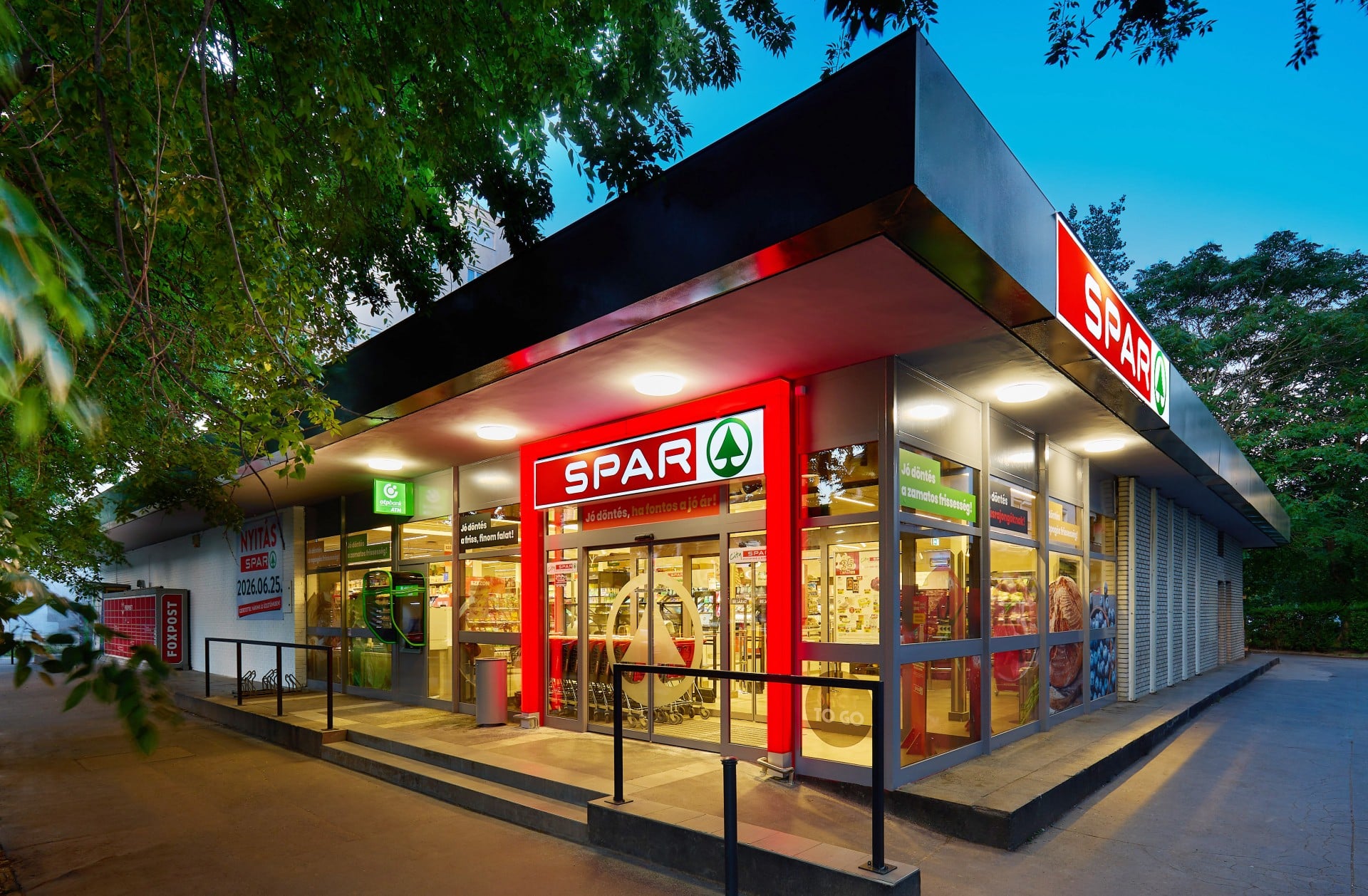
You’ll encounter SPAR frequently in Budapest. There are smaller supermarket-style SPAR stores as well as much larger Interspar locations. I use SPAR sometimes, but it isn’t where I do most of our weekly grocery shopping. One advantage of the wider SPAR/Interspar format is that larger stores can be useful when you want more choice than you would normally find in a compact discount supermarket.
If you shop there regularly, look at MySPAR and the SuperShop loyalty programme. MySPAR currently provides digital discounts and coupons and can be linked to a SuperShop card so you can collect points through the app. As with every supermarket loyalty scheme, whether it’s worthwhile depends mostly on how frequently you actually shop there.
Tesco Hungary
Tesco is another supermarket I occasionally use in Hungary. Store formats vary, and larger Tesco stores can be useful when you want to buy groceries together with household and other non-food items rather than making several separate shopping trips. Tesco also has one of the more developed loyalty programmes in Hungary: Clubcard.
Clubcard members can access selected Clubcard prices, collect points from purchases and convert points into vouchers. Tesco also provides coupons through the programme. If Tesco becomes one of your main supermarkets, registering for Clubcard therefore makes considerably more sense than repeatedly shopping without it.
Tesco also offers online grocery shopping and home delivery, which can be useful for larger shops or when getting to a supermarket is inconvenient.

Auchan Hungary
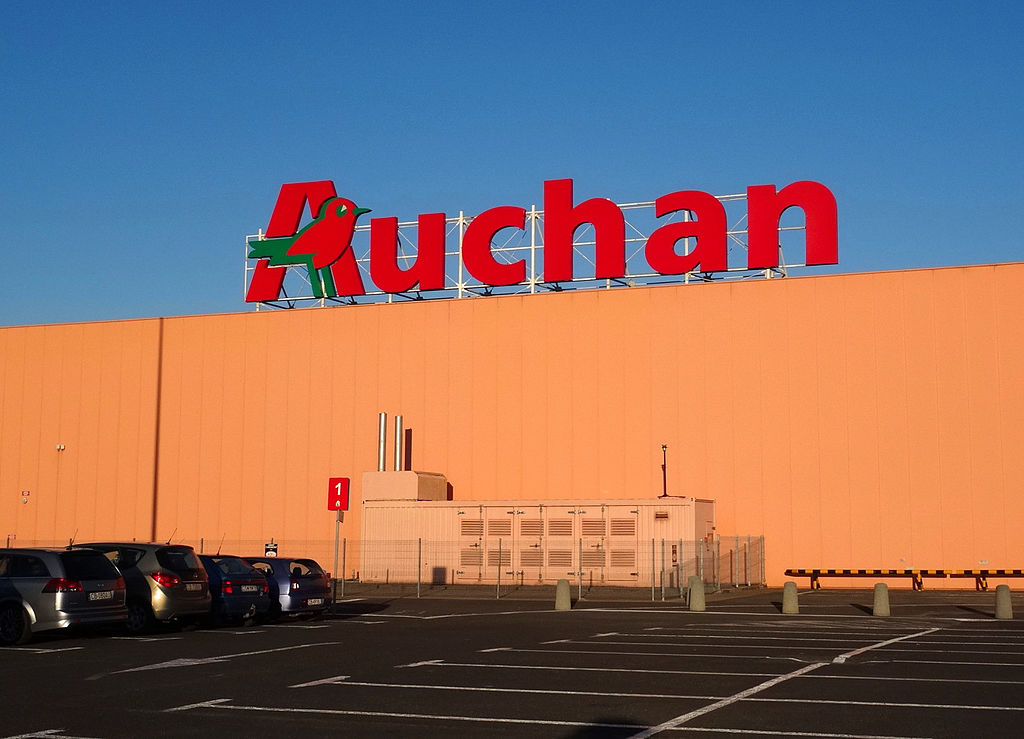
Auchan is another option, particularly if you prefer the hypermarket style of shopping. Its larger stores combine groceries with a much wider selection of household and other products. Auchan also operates the Bizalomkártya loyalty programme and the OKAuchan app.
Online shopping is available too, although delivery options depend on what you’re ordering and where you live. I don’t use Auchan enough to give it the same personal assessment I can give Lidl, so I would treat it mainly as another option worth comparing if you have a convenient store nearby or prefer doing a large shop in one place.
CBA, Príma, Coop and Reál
You’ll also see Hungarian supermarket and neighbourhood-store names such as CBA, Príma, Coop and Reál. These can be useful when they’re close to your home and you need to pick up a few things without travelling to a larger supermarket. Store size and selection can vary significantly, so I wouldn’t treat every shop carrying one of these names as having exactly the same experience.
That’s another reason I don’t think supermarket guides should simply rank every Hungarian chain from “best” to “worst.” Your local branch and what you actually buy make a big difference.Are Groceries Expensive in Hungary?
This is difficult to answer with one supermarket basket.
What a family spends depends on how many people you’re shopping for, how much meat and fresh produce you buy, whether you choose branded or own-label products, dietary requirements and how much you take advantage of weekly promotions.
Prices also change too frequently for me to give you a “family of four weekly basket” figure and pretend it will still be accurate months from now.
From my experience, Lidl has generally worked well for keeping our normal family grocery shopping reasonably priced, particularly when I combine the regular prices with Lidl Plus offers.
If you’re budgeting for a move, I discuss food together with housing, utilities and other everyday expenses in my Cost of Living in Hungary in 2026.
Don’t Compare Only the Standard Shelf Price
One thing that has become increasingly important is supermarket loyalty pricing.
Depending on where you shop, you’ll encounter programmes such as:
- Lidl Plus
- Tesco Clubcard
- MySPAR / SuperShop
- PENNY Card
- Auchan Bizalomkártya
That means the price displayed for loyalty members can sometimes be different from the standard price. If you’ve just moved to Hungary and discover that one supermarket is becoming your regular store, check whether it has an app or loyalty programme. You don’t necessarily need to sign up for everything—just the ones you’ll genuinely use. For me, that’s Lidl Plus.
Shopping at Hungarian Markets
Supermarkets aren’t the only place to buy groceries in Hungary. I sometimes shop at local markets, particularly for fresh fruit and vegetables. Depending on what’s in season and where you’re shopping, I can sometimes find produce that is both fresh and cheaper than what I’m seeing in the supermarkets. I wouldn’t replace all of our supermarket shopping with market shopping, but I like having both options.
This is also one of the more enjoyable parts of grocery shopping in Hungary because markets can introduce you to seasonal produce and ingredients you might otherwise walk past in a supermarket. If you’re still learning Hungarian, don’t worry about needing perfect Hungarian before going to a market. Knowing numbers, quantities and a few basic food words goes a long way.
Fruit and Vegetables: Do You Weigh Them Yourself?
This is something that can confuse people when shopping in an unfamiliar country because the system isn’t necessarily identical in every supermarket. Don’t assume that you always need to weigh produce yourself. In stores where the cashier weighs loose produce at checkout, you simply take what you need and bring it to the till. In stores or departments using self-service scales, you’ll need to follow the instructions beside the produce.
The easiest rule for a newcomer is simply to look for scales and signs in the fruit and vegetable section. If there’s a self-service weighing system, it should be visible. At Lidl, which is where I shop most often, loose fruit and vegetables are normally handled as part of the checkout process rather than requiring me to print my own label first.
Hungary’s REpont Bottle Return System
One part of grocery shopping that newcomers should understand is REpont, Hungary’s deposit-return system for beverage containers. Many eligible drink bottles and cans carry a return symbol and a 50 HUF deposit in addition to the product price. Don’t automatically crush or throw those containers away.
You can take eligible containers to a REpont return location, including the reverse-vending machines found at many larger supermarkets. The system covers most eligible plastic, metal and glass beverage containers between 0.1 and 3 litres placed on the Hungarian market. You’ll recognise participating packaging from its return marking, so check the bottle or can before putting it into your normal recycling.
This quickly becomes routine once you’ve lived in Hungary for a while: buy the drink, keep the eligible container and return it when you next go shopping.
Are Supermarkets Open on Sundays in Hungary?
Yes. Supermarkets in Hungary can open on Sundays, and many major supermarkets do.
However, Sunday opening hours can be shorter than weekday hours, and individual stores set their own schedules. I therefore wouldn’t rely on a rule such as “all supermarkets close at 6 PM on Sunday.” That isn’t consistently true across every chain or location. The safest option is to check the specific store you’re planning to visit, particularly on Sundays.
What About Hungarian Public Holidays?
Public holidays are different. Large supermarkets may close on certain national and public holidays, and opening arrangements can change around Christmas, Easter and other holidays.
If you need groceries around a holiday, check the supermarket’s current announcement beforehand and do your main shopping earlier rather than assuming your usual branch will be open.
Do You Need to Bring Shopping Bags?
It’s a good idea to bring reusable shopping bags. As in many European countries, you shouldn’t expect unlimited free carrier bags at checkout. Keeping a few reusable bags in the car, handbag or pushchair saves repeatedly buying another one. If you’re doing a large family shop, having your bags ready also makes packing much easier.
Self-Checkout in Hungarian Supermarkets
Self-checkout is increasingly common, particularly in larger or newer stores. The process is similar to self-checkout elsewhere: scan your products, place them in the appropriate area or bag, and pay at the machine. For certain products or situations, a member of staff may need to approve the purchase or assist you. If you don’t speak much Hungarian yet, don’t be afraid to use the staffed checkout instead. Grocery shopping is actually a useful place to gradually become familiar with everyday Hungarian words because you’ll see the same phrases repeatedly.
Expats’ Local Supermarket Starter Pack
Sweet Treats & Snacks
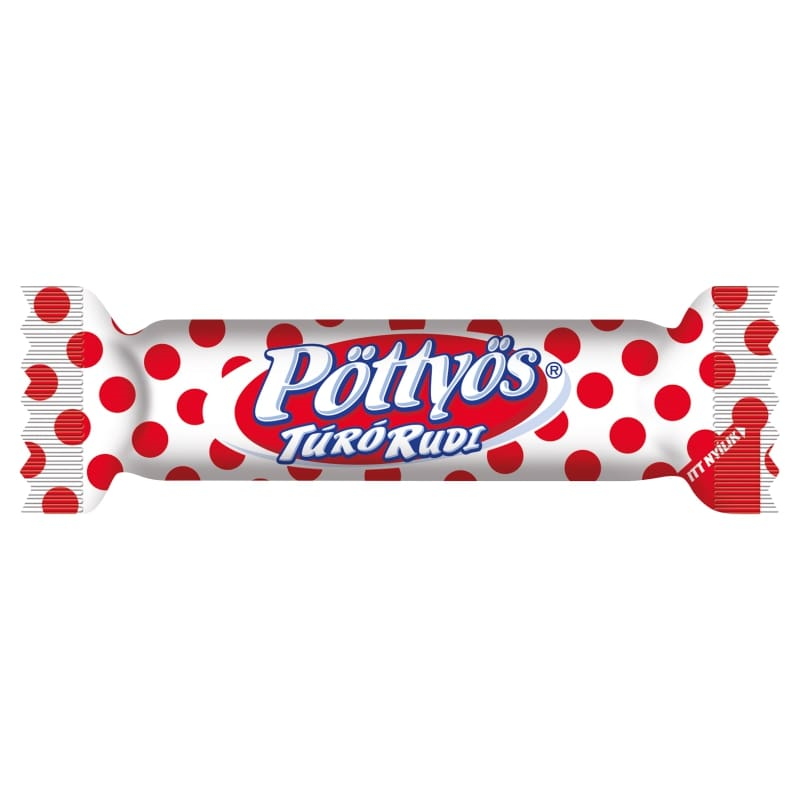
- Túró Rudi: A chocolate-coated bar filled with sweetened curd cheese (look for the iconic red polka-dot packaging from Pöttyös). Try the original sour cherry (meggyes) or hazelnut (mogyorós) variations.
- Balaton Szelet: Hungary’s staple chocolate wafer bar. Cheap, delicious, and named after Europe’s largest lake.
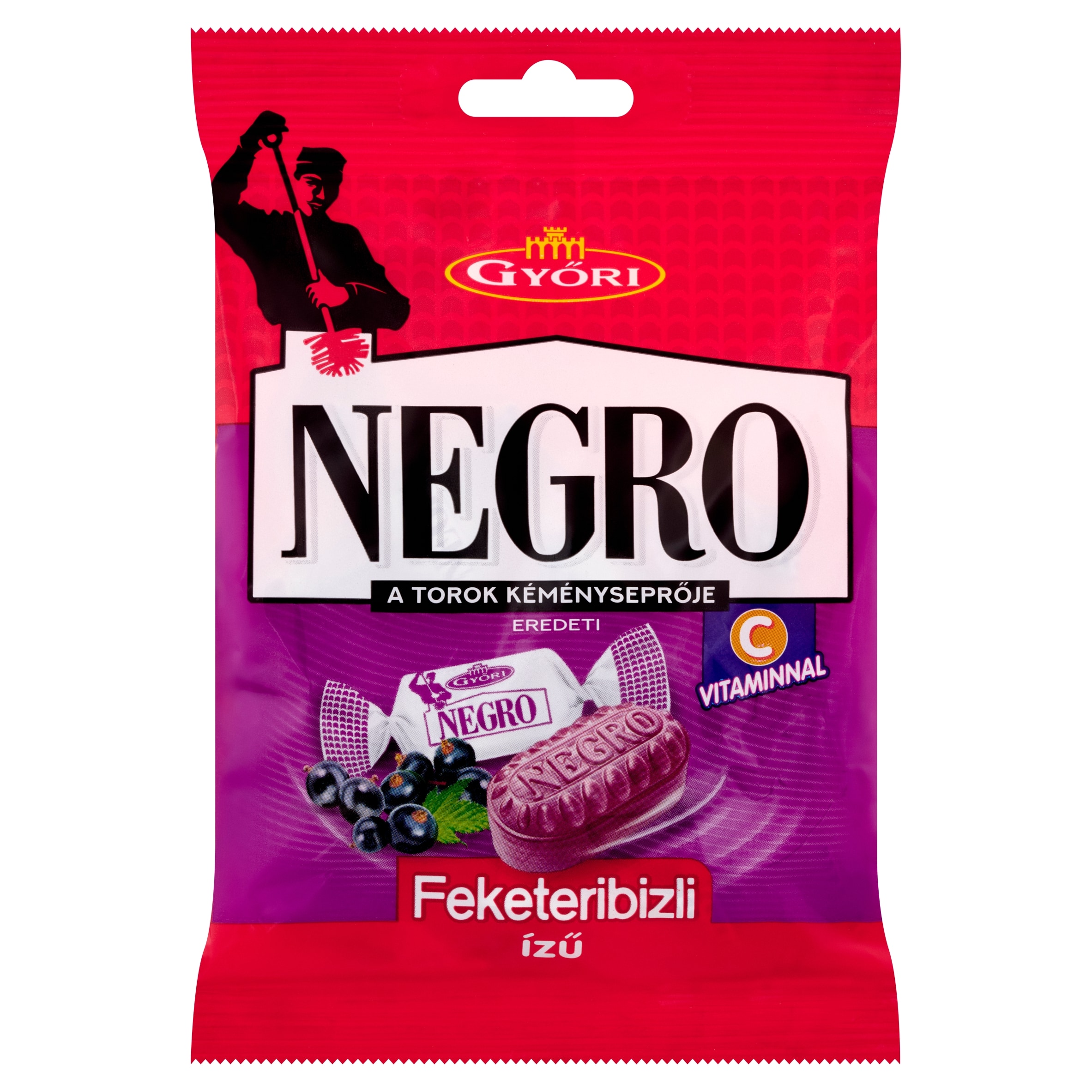
- Negro Candy: The “chimney sweep of the throat”-an iconic, intense menthol-anise black candy that locals swear by for coughs and colds.
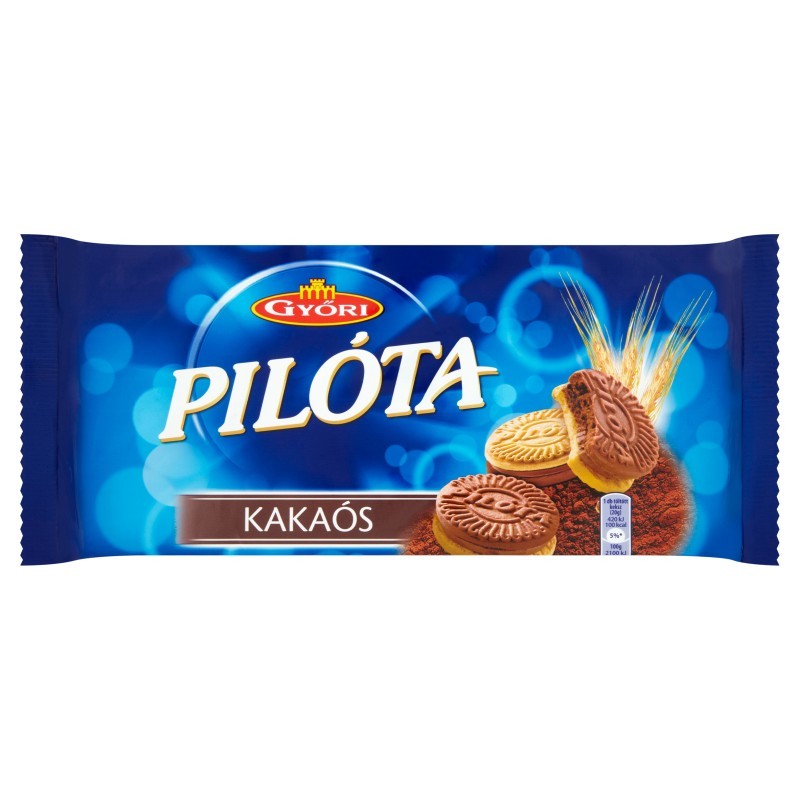
- Pilóta Keksz: A sandwich cookie similar to an Oreo, but with a richer hazelnut-cocoa cream filling and a soft biscuit texture.
Dairy & Pantry Essentials
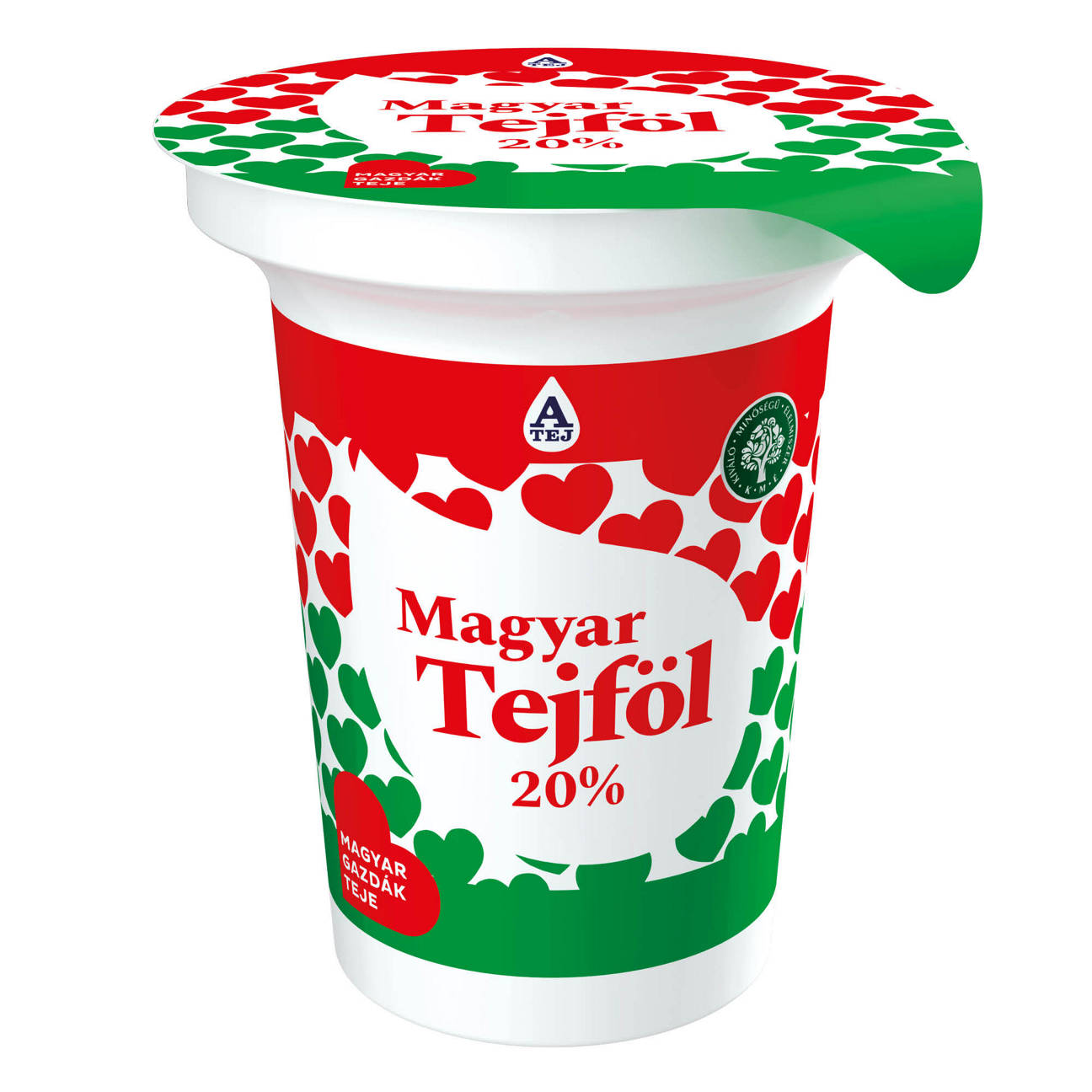
- Tejföl (Sour Cream): The backbone of Hungarian cuisine. Go for 20% fat (20%-os) for cooking authentic pörkölt or topping lángos. Avoid Főzőkrém if you want real sour cream, as that is cooking cream.
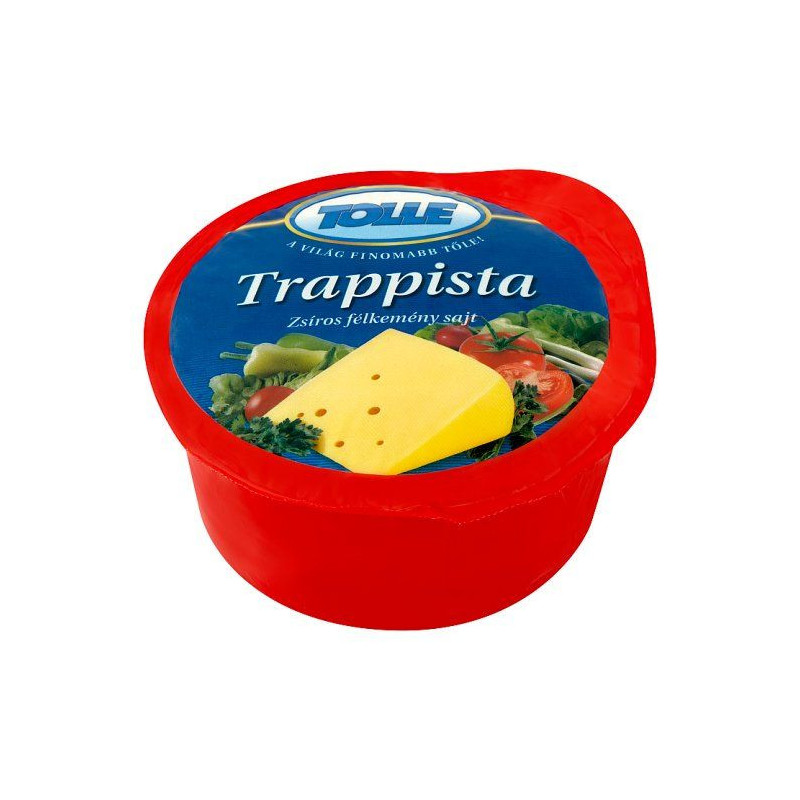
- Trappista Sajt: The most popular cheese in Hungary-a mild, semi-soft cow’s milk cheese that melts perfectly over baked dishes or sandwiches.
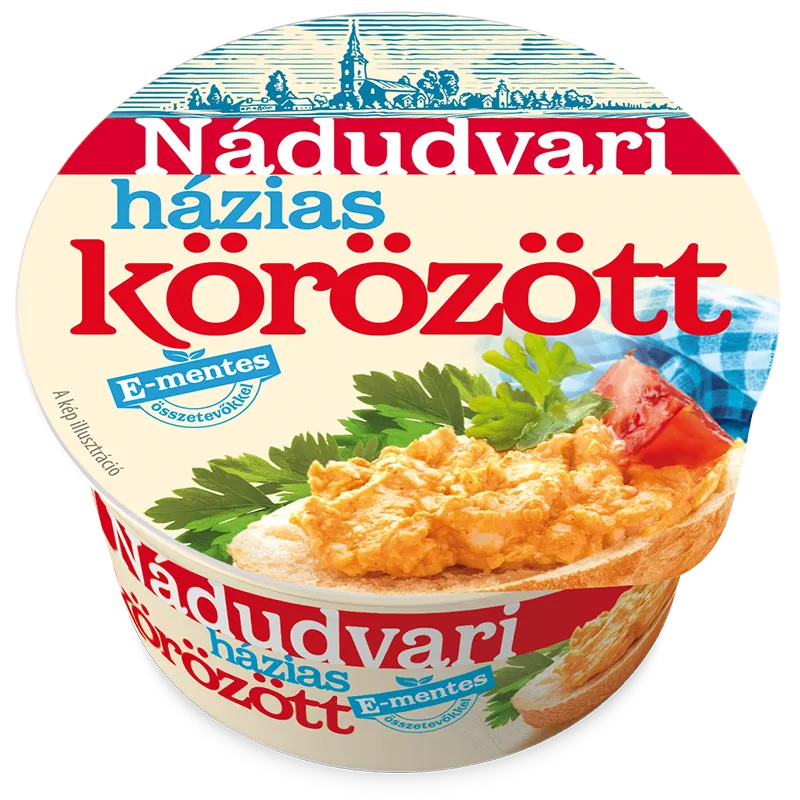
- Körözött: A savoury cottage cheese spread blended with paprika, caraway seeds, and onions. Perfect spread thick over fresh bread.
- Kecskeméti or Sió Juices: Top local fruit juices known for thick, nectar-style flavours like peach (ősi) and sour cherry (meggy).
Paprika, Spices & Condiments
- Erős Pista / Édes Anna: Coarsely crushed chilli paste (spicy “Strong Steve” and sweet “Sweet Ann”). Kept in almost every Hungarian fridge to add heat directly to soups and stews.
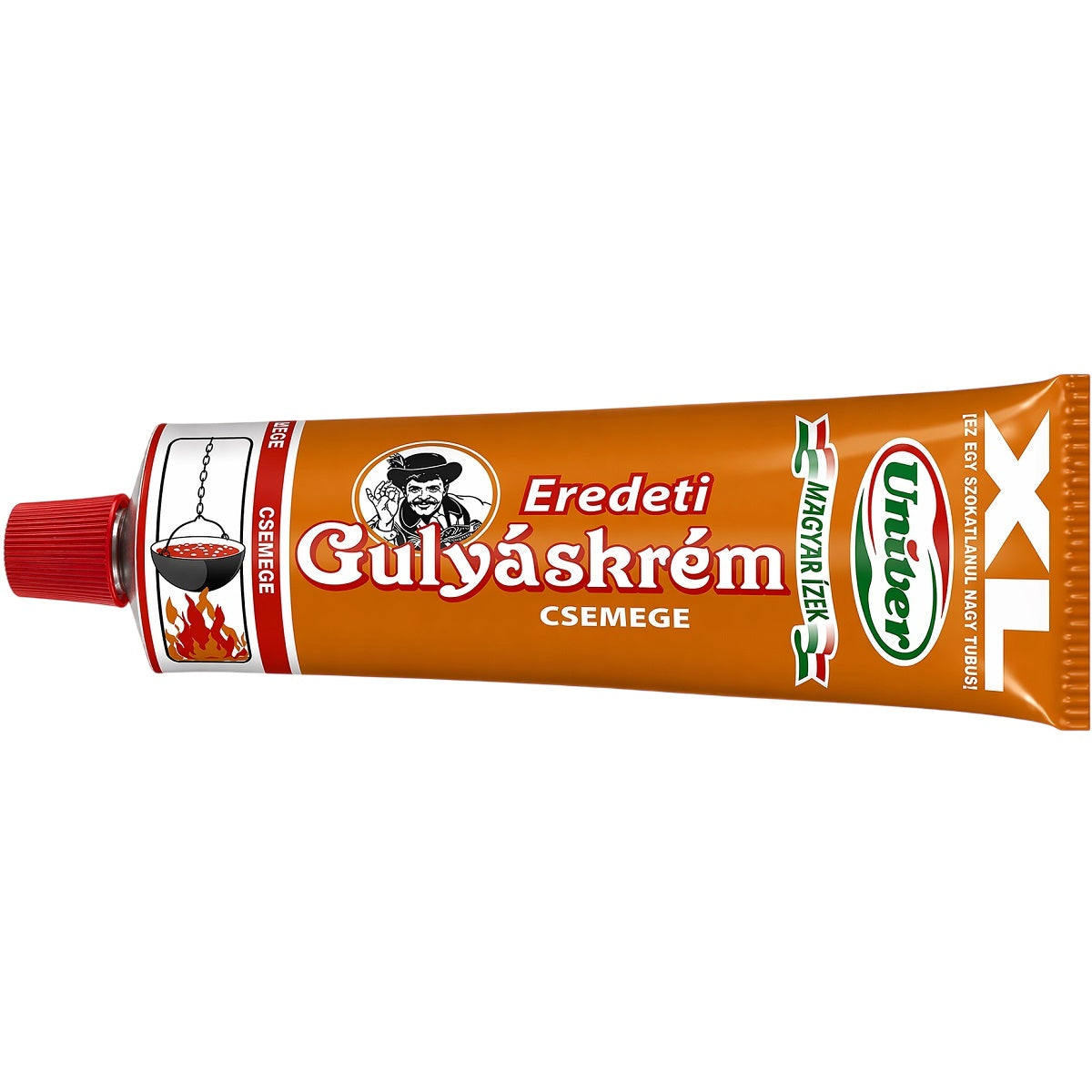
- Gulyáskrém & Piros Arany: Smooth paprika pastes in tubes (spicy or mild). Excellent for intensifying flavour in stews, marinades, or sandwich spreads.
- Fűszerpaprika (Paprika Powder): Skip the basic black-pepper aisle and buy authentic Hungarian paprika. Look for labels marked Édesnemes (Noble Sweet) from Kalocsa or Szeged.


Meats & Deli Counter
- Pick Téliszalámi (Winter Salami): The crown jewel of Hungarian charcuterie. It’s hardwood-smoked, naturally cured, and covered in a distinctive white mould layer.
- Kolbász (Hungarian Sausage): Look for Csabai or Gyulai dry sausages packed with smoked paprika and garlic. Eat it cold sliced, or toss it into Rákóczi potatoes (Rakott Krumpli).
- Szalonna (Smoked Bacon Fatback): Slab bacon used heavily for cooking base fats or traditional outdoor fireside grease-dripping gatherings (Szalonna-sütés).


Bakery Counter (Pékség)
- Kifli: The quintessential moon-shaped bread roll. Soft, cheap, and eaten daily with butter, salami, or dipped in coffee.
- Pogácsa: Savoury, bite-sized dense biscuits usually flavoured with grated cheese (sajtos), cracklings (tepertős), or potato (krumplis).
- Kakaós Csiga: A giant chocolate spiral pastry made with laminated dough-the ultimate quick Hungarian breakfast on the go.



FAQ About Supermarkets in Hungary
What is the cheapest supermarket in Hungary?
There isn’t one supermarket that is guaranteed to be cheapest for every basket and every week because prices and promotions vary.
From my own experience shopping for our family, Lidl has generally been the most affordable and practical option for our regular groceries, which is why I use it most often.
What are the main supermarkets in Budapest?
You’ll commonly find Lidl, Aldi, Penny, SPAR, Interspar, Tesco, Auchan and various Hungarian neighbourhood supermarket chains around Budapest.
Which ones are convenient will depend heavily on the district and neighbourhood where you’re staying.
Is Lidl cheap in Hungary?
I find Lidl reasonably priced for our normal family shopping and personally use it more than the other supermarkets.
Using Lidl Plus can also give you access to additional coupons and promotions.
Can I buy groceries online in Hungary?
Yes. Online grocery shopping is available in Hungary, although availability and delivery areas depend on the retailer and your address.
For example, Tesco operates online grocery ordering and home delivery, while Auchan also provides online shopping and several delivery or collection options.
Are Hungarian supermarkets open on Sunday?
Many are. Opening hours vary by chain and individual store, so check the specific location before travelling there, particularly later in the day.
Do supermarkets in Hungary accept cards?
Card payment is widely available at major supermarket chains. I would still keep a small amount of cash available when shopping at smaller markets or independent sellers, where payment options can differ.
What does the extra 50 HUF on a bottle mean?
If the drink container is part of Hungary’s mandatory deposit-return system, the additional amount is a return deposit. Keep the eligible container and return it through a REpont location rather than throwing it away.
Grocery Shopping After Moving to Hungary
Grocery shopping in Hungary didn’t give me any major culture shock. Once you know which supermarkets are convenient, understand the loyalty apps and recognise some basic Hungarian food vocabulary, it becomes another normal part of everyday life.
For me, Lidl has become the default choice. I know the stores, I like the selection, I use Lidl Plus, and it works well for our regular family shopping. I still use Aldi, Penny, SPAR and Tesco occasionally and enjoy visiting markets for fresh fruit and vegetables. My biggest recommendation is therefore not to obsess over finding the single “best supermarket in Hungary” before you’ve even arrived.
Try the shops around your home, compare your own regular basket, download the loyalty app for the supermarket you actually use, and learn a few Hungarian grocery words along the way. Those small routines are part of what eventually makes shopping in a new country stop feeling foreign and start feeling like everyday life.
Ready to put your newly acquired grocery knowledge to the test? Navigating local markets is just the first step in making yourself at home here-for more authentic insider guides, neighbourhood breakdowns, and practical cultural advice, explore more stories on Szia Soul!
 Barati Slagjana