

On December 6th, Hungary celebrates Mikulás Day (Szent Miklós napja), and I can’t help but get excited. Coming from an Orthodox background, where we celebrate St. Nicholas on December 19th, experiencing the Hungarian version has been a magical discovery for me. Mikulás brings small gifts for children, chocolate, fruits, and even a playful warning for those who misbehave; it’s a tradition full of charm and joy.
Last year, after moving to Budapest, I even made flour footprints leading to the Christmas socks so it looked like Mikulás had visited our home, and the kids were thrilled!
The History of Mikulás
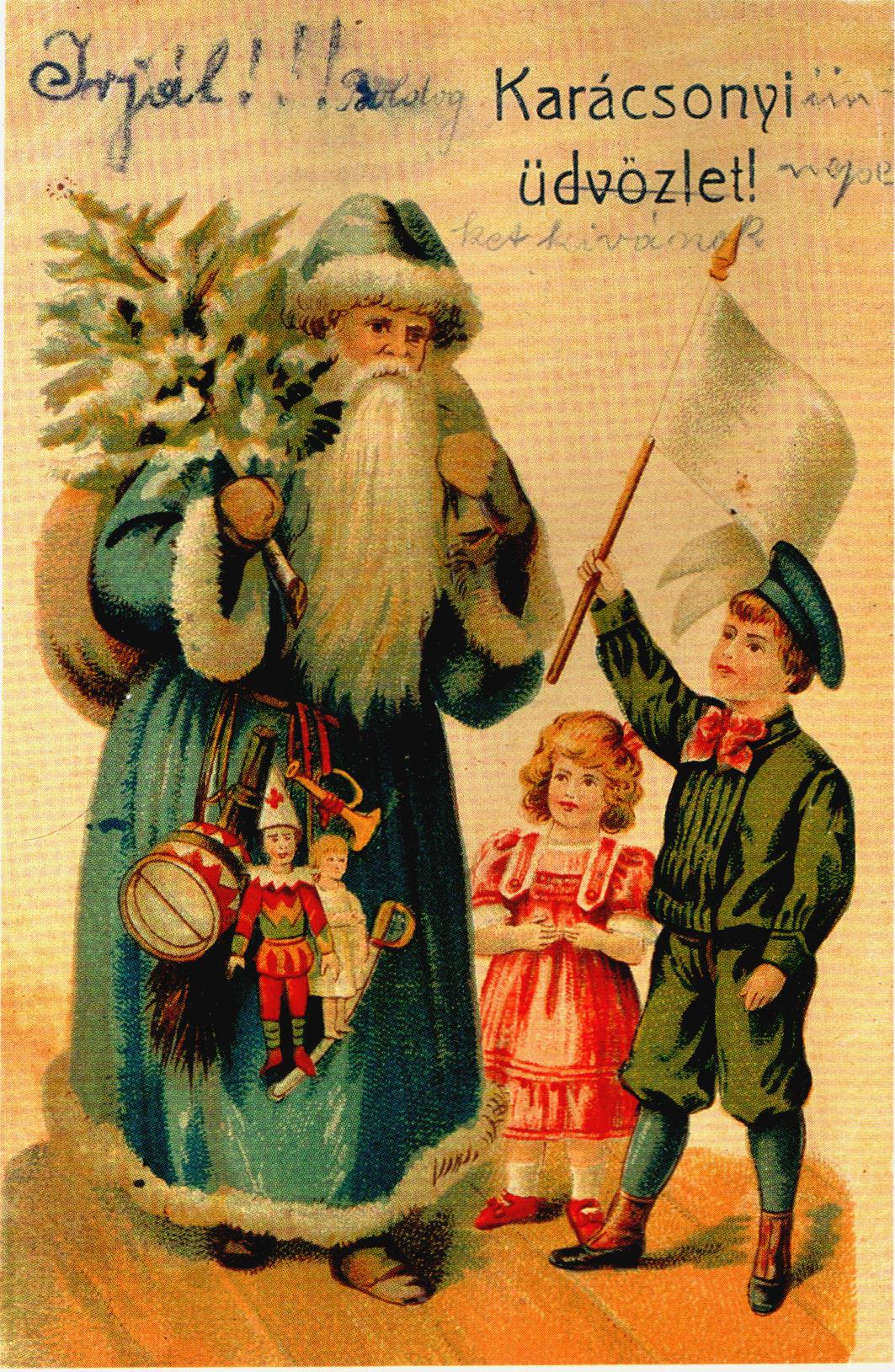
I love learning the story behind traditions. Mikulás comes from Saint Nicholas of Myra, a 4th-century bishop known for helping the poor, children, and sailors. His generosity inspired legends across Europe. In Hungary, Mikulás arrived through early Christian customs mixed with Central European folklore. Unlike Santa Claus, who comes on Christmas Eve, Mikulás visits on the night of December 5th, leaving treats for children to find the next morning. Merging with the Western tradition, Hungarians made it so that Jézuska (baby Jesus) brings the presents under the Christmas tree.
How We Celebrate Mikulás in Hungary
Polishing Boots and Waiting for Mikulás
On the evening of December 5th, children polish their boots and place them on the windowsill. It’s amazing to see their eyes light up with excitement, knowing Mikulás might visit. Last year, I added a personal touch: I made footprints with flour and a boot, so it looked like Mikulás had walked through our apartment. The kids were completely convinced, a little magic never hurts!
What Mikulás Brings
Mikulás rewards good behaviour with:
- Chocolate figures shaped like Mikulás
- Szaloncukor (Hungarian Christmas candies)
- Apples, mandarins, and nuts
- Small toys, books, or colouring sets
It’s my favourite part to prepare these surprises and see the joy on my children’s faces.
The “Naughty List” and the Virgács Stick
Of course, folklore says that naughty children might get a birch stick, called a virgács. When my parents-in-law were involved, they kept the tradition alive; the golden, whey-broom-like stick was mostly playful, but it certainly added to the excitement! It’s a gentle reminder for children to behave, and for me, it’s part of what makes this tradition so authentic and fun.

Krampusz – The Scary Companion
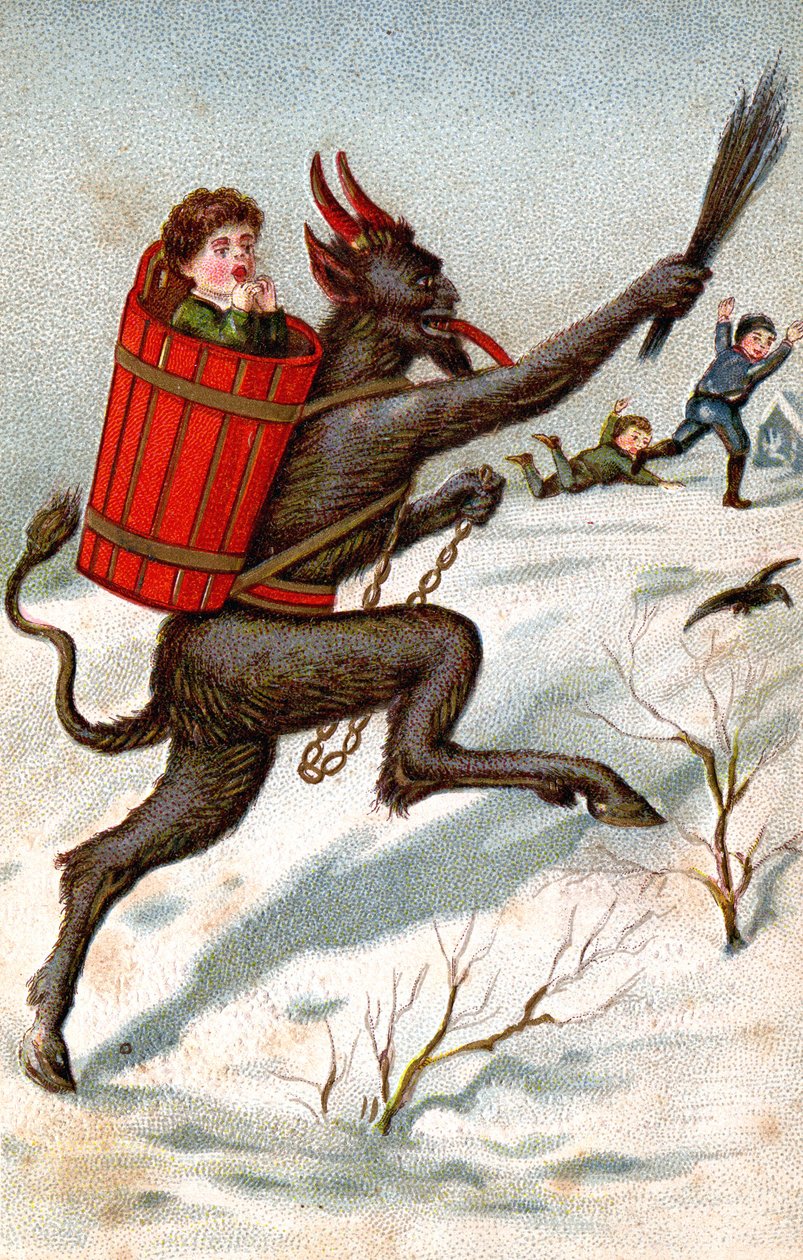
Some people think Mikulás comes with an evil spirit called Krampusz:
- Horned and dark, often covered in fur
- A little scary, but mostly playful in modern times
- His role is to tease mischievous children, not harm them
Why I Love Mikulás in Hungary
Living in Budapest has made Mikulás one of my favourite December traditions. I love how it builds excitement early in the month, allows me to create magical moments for my children, and connects me to Hungarian culture. From polishing boots and leaving flour footprints to hiding chocolate and tiny surprises, it’s a celebration I look forward to every year.
Here is some song I found about Mikulás:
It’s also funny how the grandparents sneak in a shiny virgács stick – a playful nod to tradition that makes the holiday even more memorable. Explore more topics on Szia Soul.